VITURE just dropped its newest XR glasses, the Beast, and they are not messing around. Packed with a wider field of view, brighter displays, and slick new software tricks, this pair is aimed straight at the wearable display crowd. The Beast is now officially available on Amazon, Best Buy, and VITURE’s own site, starting at $549.
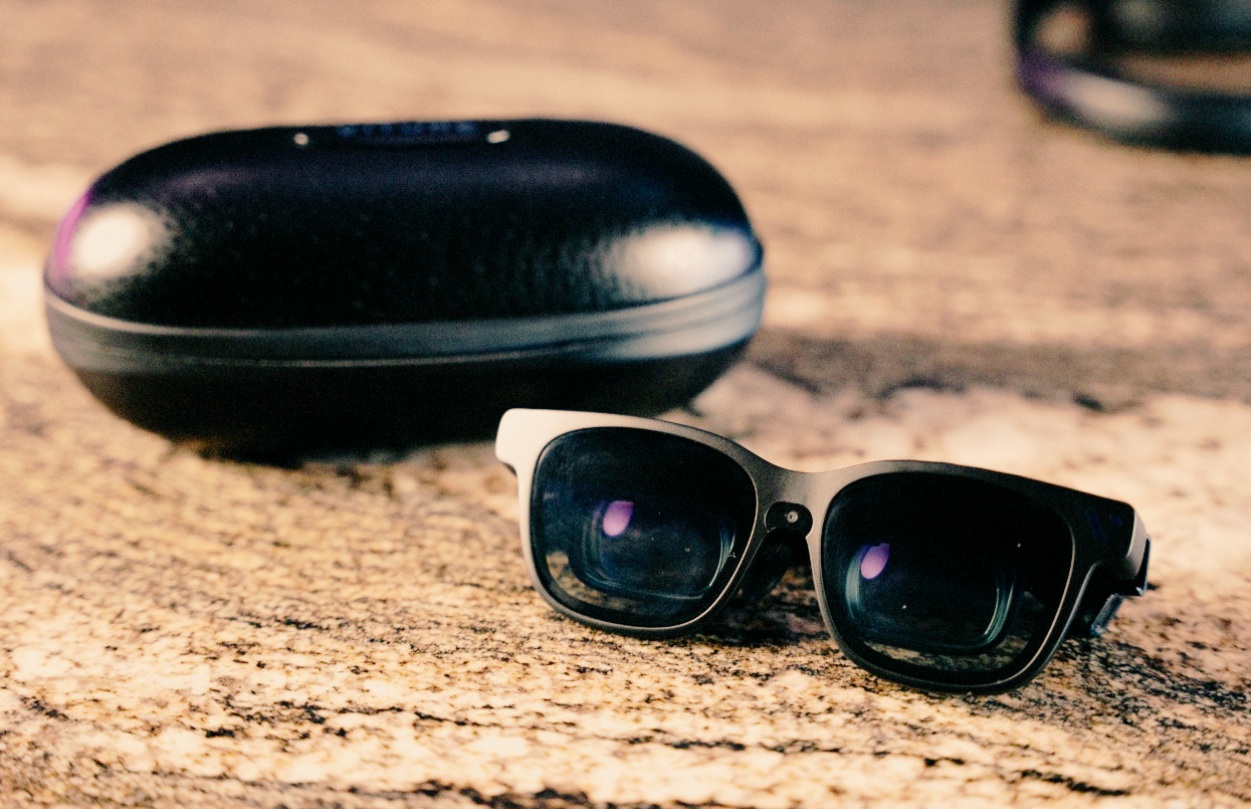
Building on the foundation of the earlier One and Luma series, the Beast is now VITURE’s flagship XR model. Wearable displays have been picking up serious steam lately, mostly because many users want to avoid bulky VR headsets. These glasses are lighter, easier to wear, and laser-focused on portable entertainment—giving you a personal, virtual screen anytime, anywhere. Instead of cutting you off from the world in full VR, the Beast emphasizes multitasking, media consumption, and managing your digital life on the go.
Brighter Screens and Cinematic Views
The VITURE Beast XR glasses feature a display powered by an advanced 58-degree field of view (FOV) stereoscopic system, marking the largest viewing angle the company has offered to date. Equipped with Sony micro-OLED screens, the glasses boast a peak perceived brightness of up to 1,250 nits, meaning you can easily see the image even in a sunlit room or outdoors. According to VITURE, the visual experience simulates watching a massive 174-inch screen from four meters away—essentially giving you a private cinema in your pocket.
Setting them up is plug-and-play via USB-C Alt-Mode. The Beast functions as an external display rather than a standalone headset, keeping it incredibly light and compact. It works seamlessly with smartphones, laptops, gaming handhelds like the Steam Deck and ROG Ally, and standard workstations. Furthermore, VITURE has retained and refined its fan-favorite birdbath-style optics, incorporating a flat Modulation Transfer Function (MTF) layout that delivers crisp visual clarity across the entire canvas without adding unnecessary weight.
Smarter Software and Dialed-In Comfort
VITURE didn’t just slap on a better screen and call it a day; they put serious effort into software and usability. Take VisionPair™, their built-in screen customization architecture. Operating directly at the hardware level, it allows you to pin a virtual window in physical space (Anchor Mode), set it to smooth-track your head movements (Smooth Follow) to prevent motion sickness, or switch to an ultra-wide panoramic mode for heavy multitasking.
Another standout feature is the advanced lens dimming. The Beast utilizes electrochromic lenses with nine distinct tint levels ranging from 0.5% to 40% transmittance, allowing you to darken the glass to cut glare or block out bright ambient light directly from the frame. Many competitors fall short here, either offering fewer tint options or forcing users to fiddle with physical, clip-on lens covers.
The audio department also received a major upgrade. The Beast features built-in speakers fine-tuned with HARMAN AudioEFX, supporting directional 3DOF (Three Degrees of Freedom) spatial audio. This creates an immersive soundstage while still allowing you to hear environmental noise—a crucial safety feature when using them in public. A discreetly built-in microphone array handles phone calls and voice controls.
Future-Proofing with a Front-Facing Camera
A front-facing RGB camera is built directly into the frame’s bridge. While it currently allows users to snap photos and record video, VITURE promises that future software updates will unlock full 6DOF (Six Degrees of Freedom) tracking. Once active, this will allow your virtual screens to anchor permanently to your real-world environment, staying put even as you walk around the room. While the Beast doesn’t offer full-blown, interactive spatial computing overlays just yet, it represents a massive step toward true mixed reality.
The frame itself is constructed from a lightweight yet durable aerospace aluminum-magnesium alloy, bringing the total weight to just 88 grams. To ensure an ideal fit, it comes in two different sizes tailored to different inter-pupillary distances (IPD)—a Regular option optimized for 64mm (±6mm) and a Large option optimized for 68mm (±6mm). Getting the hardware sizing right is crucial for avoiding edge blur and ensuring long-term comfort, and it’s refreshing to see hardware brands acknowledge that one size does not fit all.
Technical Specifications: The Beast at a Glance
To truly understand how this hardware dominates the playing field, we have to look under the hood. Below is the complete, pro-grade technical breakdown of the VITURE Beast architecture.
| Core Component | Specification Details | Real-World Performance Impact |
| Display Panel | Dual 0.68″ Sony Micro-OLED | Professional monitor-grade clarity; elimination of blurry edges. |
| Resolution | 1920 × 1200 per eye (3840 × 1200 combined) | Hyper-sharp “4K-like” rendering for crisp text readability. |
| Refresh Rate | 120Hz (Native) | Silky-smooth gaming performance with ultra-low latency. |
| Peak Brightness | 1,250 Nits (Perceived) | The brightest panel in its class; vivid outdoor and daylight viewing. |
| Field of View (FOV) | 58° Optics | Projects a massive 174-inch virtual screen measured at 4 meters. |
| Spatial Tracking | Native Hardware-Level 3DoF (VisionPair™) | Zero-drift screen anchoring operating entirely independent of apps. |
| Dimming Tech | 9-Level Electrochromic (0.5% to 40%) | From completely transparent glasses to 100% light-blocking theater mode. |
| Audio Architecture | Embedded Speakers via HARMAN AudioEFX | Spatial, cinema-grade audio with a 250 Hz fundamental frequency. |
| Chassis Material | Aerospace Aluminum-Magnesium Alloy | High durability with flexible temples; total weight sits at just 88g. |
| Device Interfacing | Native USB-C Alt-Mode (DisplayPort) | Plug-and-play with Mac, Windows, Steam Deck, ROG Ally, and iPhone. |
The XR Market is Heating Up
The wide release of the Beast comes at a time when the wearable display market is fiercely competitive, with big names like XREAL, RayNeo, and Meta rolling out their own smart glasses.
VITURE’s strategy focuses heavily on media, gaming, and productivity. Notably, when paired with the optional Pro Mobile Dock, the Beast is one of the few flagship devices offering optimized, day-one compatibility with the Nintendo Switch 2 docked-mode output. This ecosystem advantage, combined with the Beast’s high brightness and native 3DOF tracking, gives it a distinct edge over rivals that still rely on basic fixed displays. While it isn’t trying to be a standalone AR headset, it is a top-tier option for anyone seeking an immersive virtual workspace or entertainment hub on the move.
Following a pre-order phase that kicked off in late 2025, the Beast is finally moving into mainstream retail channels. This wider launch is a massive milestone for VITURE as they look to capture a broader audience.
As wearable tech continues to evolve, devices like the VITURE Beast prove that manufacturers are successfully bridging the gap between basic smart glasses and heavy VR headsets. Portable virtual displays are no longer just a niche trend—they are shaping up to be the future of how we interact with media, anywhere we want.
Frequently Asked Questions (FAQ)
To wrap up this launch breakdown, let’s answer the most common questions tech enthusiasts are asking about the VITURE Beast.
Q: Do I need to buy prescription inserts, or are there built-in diopter dials?
A: Unlike previous models in the entry-level Luma lineup that utilize mechanical diopter dials, the flagship VITURE Beast removes the physical dials to perfect its optical stack. Instead, it relies on a specialized, swappable prescription lens frame included right in the box. This ensures a lighter overall chassis weight (88g) and completely eliminates edge-blur or alignment issues for individuals with complex astigmatisms.
Q: Does the built-in 3DoF tracking require a battery inside the glasses?
A: No. The VITURE Beast features no built-in battery, keeping the frames exceptionally light and cool against your face. It draws a minimal, highly optimized power current directly over the USB-C cable from your host device (like your laptop, phone, or mobile dock).
Q: What is the difference between the Regular and Large models?
A: To ensure absolute visual alignment across different facial structures, VITURE offers the Beast in two distinct physical sizes based on Interpupillary Distance (IPD). The Regular frame is perfectly optimized for standard IPDs of 64mm (fitting a safe variance of ±6mm), while the Large frame safely accommodates broader facial structures centered around 68mm (up to 74mm).
Q: Can the VITURE Beast convert standard 2D movies into 3D?
A: Yes! When paired with VITURE’s SpaceWalker companion platform (available on Windows, Mac, iOS, and Android), the glasses can utilize hardware-accelerated algorithms to execute real-time 2D-to-3D video conversion, adding natural spatial depth to traditional media streams.